After a Car Accident, You May Be Asking What Happens if the Other Driver Had No Insurance or You Were Blamed for Part of the Crash
May 11, 2026
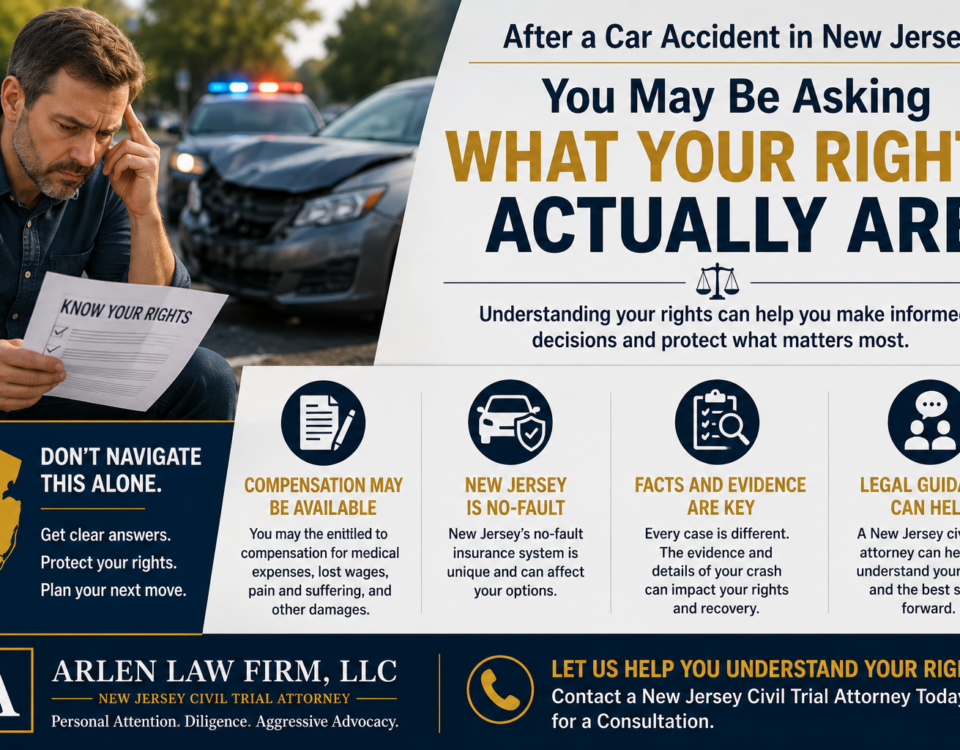
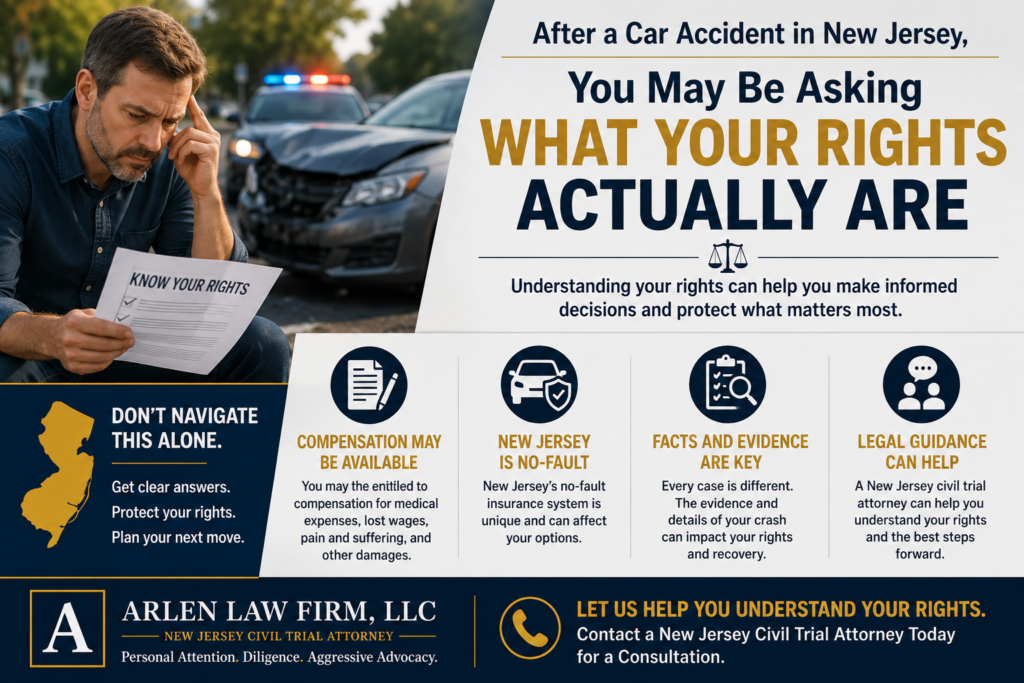
After a Car Accident in New Jersey, You May Be Asking What Your Rights Actually Are
May 29, 2026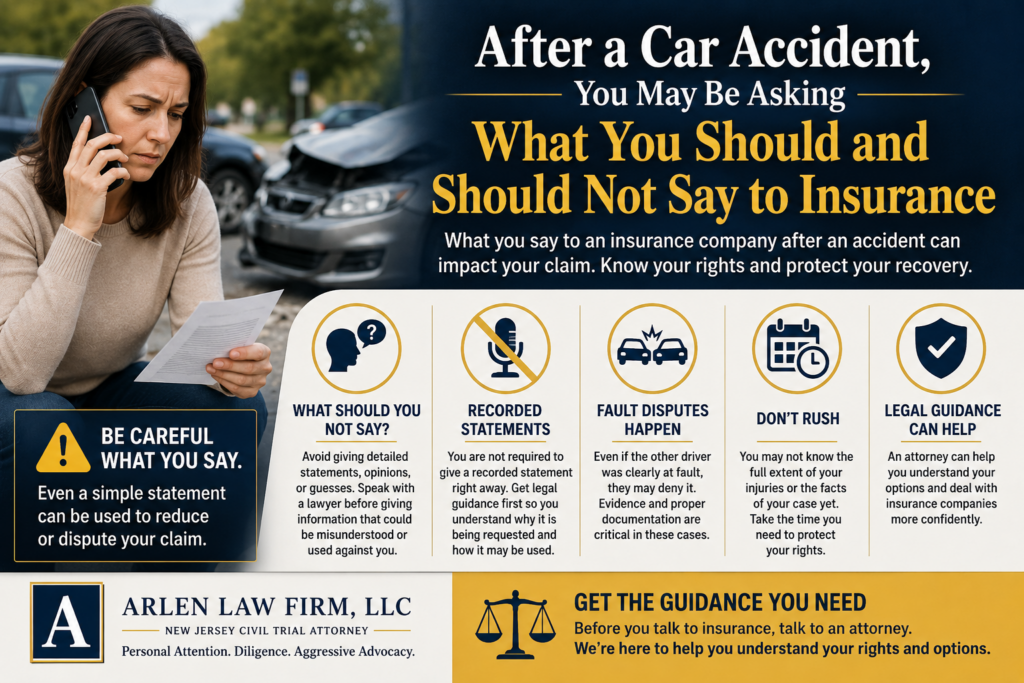
If an insurance company has contacted you after a crash, you may feel pressure to respond quickly.
You may also be worried about saying the wrong thing.
That concern is understandable. After a car accident, you may still be figuring out what happened, how badly you were hurt, and what your options are. At that stage, many people want to know how to deal with insurance carefully, especially if the other driver was at fault but is now denying responsibility.
Speaking with a lawyer does not mean you are filing a lawsuit. In many situations, it simply means making sure you understand the process before giving statements or making decisions.
Why This Question Matters
You may be asking:
- What should you not say to insurance after an accident?
- Do you have to give a statement right away?
- What if the other driver was clearly at fault but now denies it?
- Can what you say be used to reduce or dispute your claim?
These are common concerns, especially early in a case.
Why New Jersey Experience Matters
New Jersey accident and insurance issues do not always work the way people expect. The state’s insurance structure can affect how claims are handled and how fault-related questions are evaluated.
That is one reason many injured people want New Jersey-specific legal guidance before dealing extensively with insurance companies.
Why Choose Arlen Law Firm, LLC?
Arlen Law Firm, LLC is a full-service civil trial firm known for personal attention, diligence, and aggressive advocacy. Geoffrey C. Arlen is certified by the Supreme Court of the State of New Jersey as a Civil Trial Attorney.
If you are unsure how to deal with insurance after a crash, local legal guidance can help you move more carefully.
Questions You May Have Before Talking to Insurance
After a crash, you may not know whether the call you received is routine, strategic, or something you should be more cautious about.
That is why many people ask these questions before saying too much.
What Should You Not Say to Insurance After an Accident?
The better question is often not what specific words to avoid, but whether you fully understand the situation before answering detailed questions.
If you are still in pain, still gathering facts, or still unsure what happened, it may be wise to get legal guidance before giving detailed statements, estimates, or conclusions.
Many injured people speak with a lawyer first because they want to avoid making premature statements that may not reflect the full picture.
Should You Give a Recorded Statement?
That depends on the situation.
If you are unsure why a statement is being requested, how it may be used, or whether the facts are still developing, speaking with an attorney first can help you make a more informed decision.
What If the Other Driver Was at Fault but Denies It?
This happens more often than people expect.
If the other driver denies fault, the case may turn more heavily on evidence, witness accounts, reports, photos, damage patterns, medical documentation, and other facts. That is one reason many injured people seek legal guidance quickly when responsibility is being disputed.
If you are in that situation, it may be especially important to be careful about what you say before the facts are fully reviewed.
Should You Explain Everything to Insurance Right Away?
Not necessarily.
After an accident, you may not yet know the full extent of your injuries or how the facts will be interpreted later. Many people choose not to rush into detailed conversations until they better understand their own condition and legal position.
What If Insurance Pressures You to Move Quickly?
If you feel rushed, confused, or pressured, that alone may be a reason to slow down and seek legal guidance.
Many injured people speak with a lawyer because they want to understand what is happening before responding further.
Can What You Say Affect Your Claim?
Potentially, yes.
That is why many people prefer to get legal advice before having detailed conversations with the other driver’s insurance company, especially when injuries, fault disputes, or early settlement discussions are involved.
When You May Decide to Contact Arlen Law Firm, LLC
You may want to contact Arlen Law Firm, LLC if you:
- Are unsure what to say to insurance
- Are being asked for a statement
- Believe the other driver caused the crash but is denying fault
- Feel pressured to respond before you are ready
- Want legal guidance before making a decision that may affect your case
Frequently Asked Questions About Talking to Insurance After a New Jersey Car Accident
What should you not say to insurance after an accident?
Many injured people try to avoid making detailed statements before they fully understand the facts, their injuries, and how the claim may be evaluated.
Should you give a recorded statement?
That depends on the situation. Many people speak with a lawyer before agreeing to provide one.
What if the other driver was at fault but denies it?
Fault disputes are common. Evidence and documentation can become especially important in these cases.
Should you talk to a lawyer before insurance?
Many people do, especially when they are unsure what to say or how the case may develop.
Why does New Jersey law matter here?
New Jersey’s insurance structure is different from many other states, which can affect how accident claims are handled.
Talk With a New Jersey Civil Trial Attorney Before Making Important Insurance Decisions
If you were hurt in a car accident and are unsure what to say to insurance, speaking with an experienced New Jersey civil trial attorney can help you better understand your options before you respond.